Hemlane and TurboTenant both sell to the self-managing landlord, and they price in opposite directions. TurboTenant starts at $0 and charges by portfolio band, a flat yearly fee for every unit from one to ten. Hemlane charges a monthly platform fee plus a rate per unit, so every door you add moves the bill. Put the two side by side at your door count and the software question settles fast. The services question takes a little longer.
Both are tools for running a tenancy. Neither one fills a vacant unit faster. If an empty unit is the problem this month, you can list it on RentPlace for $39 a month and get inquiries that arrive with move-in date and income already answered, or score your ad first in the Listing Grader.
The short answer
For software alone, TurboTenant is cheaper than Hemlane at every door count. The fair match is TurboTenant Pro against Hemlane Basic, since both waive the tenant's bank transfer fee: $199 a year against $456 at five doors, and $699 against $1,536 at 50. Hemlane only earns its price when you buy what TurboTenant does not sell in software, a repair coordinator on Essential, or tenant placement at $695 against TurboTenant's $1,500.
The full fee schedules sit on our Hemlane pricing and TurboTenant pricing pages. This article lines them up.
Hemlane vs TurboTenant pricing from 1 to 50 doors
Yearly cost to the landlord. TurboTenant bills its paid plans annually only. Hemlane is shown on annual billing, with Basic on monthly billing in its own column because many landlords start there.
| Doors | TurboTenant Free | TurboTenant Essentials | TurboTenant Pro | Hemlane Basic, annual | Hemlane Basic, monthly | Hemlane Essential, annual |
|---|---|---|---|---|---|---|
| 1 | $0 | $149 | $199 | $360 | $438 | $576 |
| 3 | $0 | $149 | $199 | $408 | $498 | $1,056 |
| 5 | $0 | $149 | $199 | $456 | $558 | $1,536 |
| 10 | $0 | $149 | $199 | $576 | $708 | $2,736 |
| 20 | $0 | $199 | $399 | $816 | $1,008 | $5,136 |
| 50 | $0 | $299 | $699 | $1,536 | $1,908 | $12,336 |
Two things drive the gap. First, Hemlane's $28 platform fee ($34 on monthly billing) is charged once per account on every paid plan, so a one-door landlord on Basic pays $2 for the software and $28 for the platform. Second, TurboTenant's bands are wide. Pro costs the same $199 at one door and at ten, which works out to under $20 per door a year at the top of the band. Hemlane has no volume break at any size; the per-unit rate is a straight line.
Hemlane also has a $0 Starter plan, but it does not collect rent. It covers syndication, screening and accounting with bank sync, which makes it a listing and bookkeeping tool rather than a match for TurboTenant's free plan.
What tenants and applicants pay on each
The landlord's bill is half the comparison. Both companies earn from the other side of the tenancy, and the gap there runs the other way.
| Fee | TurboTenant | Hemlane |
|---|---|---|
| Rent by bank transfer | $2 per payment on Free, free on Pro, paid by the tenant | Free on every paid plan |
| Rent by card | 3.49%, paid by the tenant | 3%, landlord chooses who pays |
| Screening | $55 per applicant on Free, $45 on Pro | $40 per applicant |
| Rental application | Included in the screening fee | Free |
| Rent reporting | $4.99 a month, optional | Offered as a tenant perk from Basic up |
On $1,800 of rent paid by card, a TurboTenant tenant pays $62.82 a month and a Hemlane tenant $54, or nothing if you take the fee on. A landlord on TurboTenant's free plan with five tenants paying by bank transfer is pushing $120 a year of fees onto them, which is the price of keeping the landlord's own bill at zero. Pro removes that for $199. Our TurboTenant review covers how landlords feel about passing those fees on once tenants start asking.
Tenant placement and repairs, where Hemlane earns its price
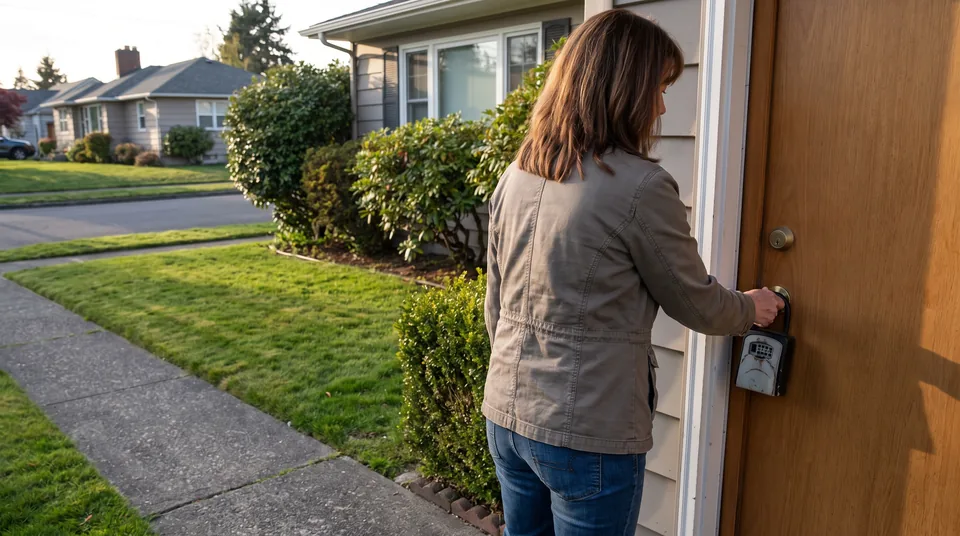
This is where the comparison flips. Hemlane is a software company that also sells people. Its Tenant Placement is $595 plus a required $100 lockbox, $695 in total: market analysis, premium syndication, pre-qualification, self-guided tours through a digital lockbox with ID checks, the application, the credit check and the e-signed lease. The $1,295 Leasing Services bundle adds an inspection and rent-ready coordination. TurboTenant's standalone tenant placement is a $1,500 flat fee, so Hemlane is $805 cheaper per placement.
Repairs are the other line. Hemlane Essential, at $20 a unit plus the platform fee on annual billing, adds a repair coordinator with a 24/7 emergency line who troubleshoots with the tenant and opens work orders with your own vendors, invoiced with no markup. TurboTenant's software takes maintenance requests on every plan, including Free, but coordination is part of its full-service management, which it prices on request. If you run your own vendor list through those work orders, keep each contractor's insurance current; a tool that tracks contractor insurance certificates will flag the ones that lapse before a roofer is on your property uninsured.
So the honest read of the price table: if you are paying Hemlane only for rent collection and leases, you are paying double. If you would otherwise hire a leasing agent once a year or lose sleep over a 2am water heater call, $1,536 a year at five doors on Essential can be cheaper than the alternative. Our Hemlane review covers how the repair coordinator works in practice.
Where TurboTenant is the better buy
- Software only. At every door count from 1 to 50, TurboTenant Pro costs less than Hemlane Basic, usually less than half.
- One to ten doors. The $199 Pro band covers ten units, so the price per door drops the more you own inside it.
- You want a free start. TurboTenant's free plan collects rent. Hemlane's free Starter plan does not.
- Your tenants are fine with a $2 fee. Then the landlord bill is $0 at any size, which no Hemlane plan can match.
Where Hemlane is the better buy
- You buy a placement a year. $695 against $1,500 pays for a year of Basic at ten doors on its own.
- You live far from the property. The repair coordinator and the local leasing network are the product; the software is the wrapper.
- Your applicants are price-sensitive. $40 to apply against $45 or $55, and no application fee on top.
- Several people work the account. Hemlane includes unlimited users on every plan.
Hemlane vs TurboTenant questions landlords ask
Is Hemlane cheaper than TurboTenant?
No, not for software. Hemlane Basic costs $360 a year for one door on annual billing and $456 for five, while TurboTenant Pro is $199 for anything up to ten doors and its free plan is $0. Hemlane is cheaper only for services: tenant placement at $695 against TurboTenant's $1,500, and screening at $40 against $45 or $55.
Does Hemlane charge tenants?
Less than most. Hemlane charges tenants nothing for rent paid by bank transfer on any paid plan, and the 3% card fee can be paid by the tenant or the landlord, your choice in settings. Applicants pay $40 for the TransUnion screening; the application itself is free.
Is TurboTenant really free for landlords?
The free plan costs the landlord nothing, including rent collection and maintenance requests. Tenants and applicants pay for it: $2 per bank payment, 3.49% by card and $55 per screening. Pro, at $199 a year for up to ten units, waives the bank fee and lowers screening to $45.
What neither one does for an empty unit
Both platforms syndicate your listing to the big portals and hand you the leads. A lead is a name and a message. Deciding which of thirty to show the unit to still takes a phone call each, and a vacant $1,800 unit costs about $60 a day while you make them. That is the gap RentPlace fills: renters answer move-in date, income band, occupants, pets and lease length before their message can send, so you book showings only with people who fit.
Use it alongside either platform. The Landlord plan is $39 a month for up to five listings. If you are still pricing the rest of the stack, our RentSpree pricing page shows the cheapest way to make rent free for tenants from four doors, and the Baselane vs TurboTenant pricing comparison covers the bank-first option.